Bringing together outstanding young scholars from around the world, Yangtze University hosted its 6thGlobal Young Scholars Forum on March 28 in the Xinhuo Multi-functional Lecture Hall. Centered on the theme “Connecting the World, Empowering Yangtze University, Shaping the Future”, the forum attracted nearly 200 early-career researchers and academics from home and abroad to explore opportunities for collaboration, exchange innovative ideas, and contribute to the University's pursuit of becoming a distinctive high-level university.
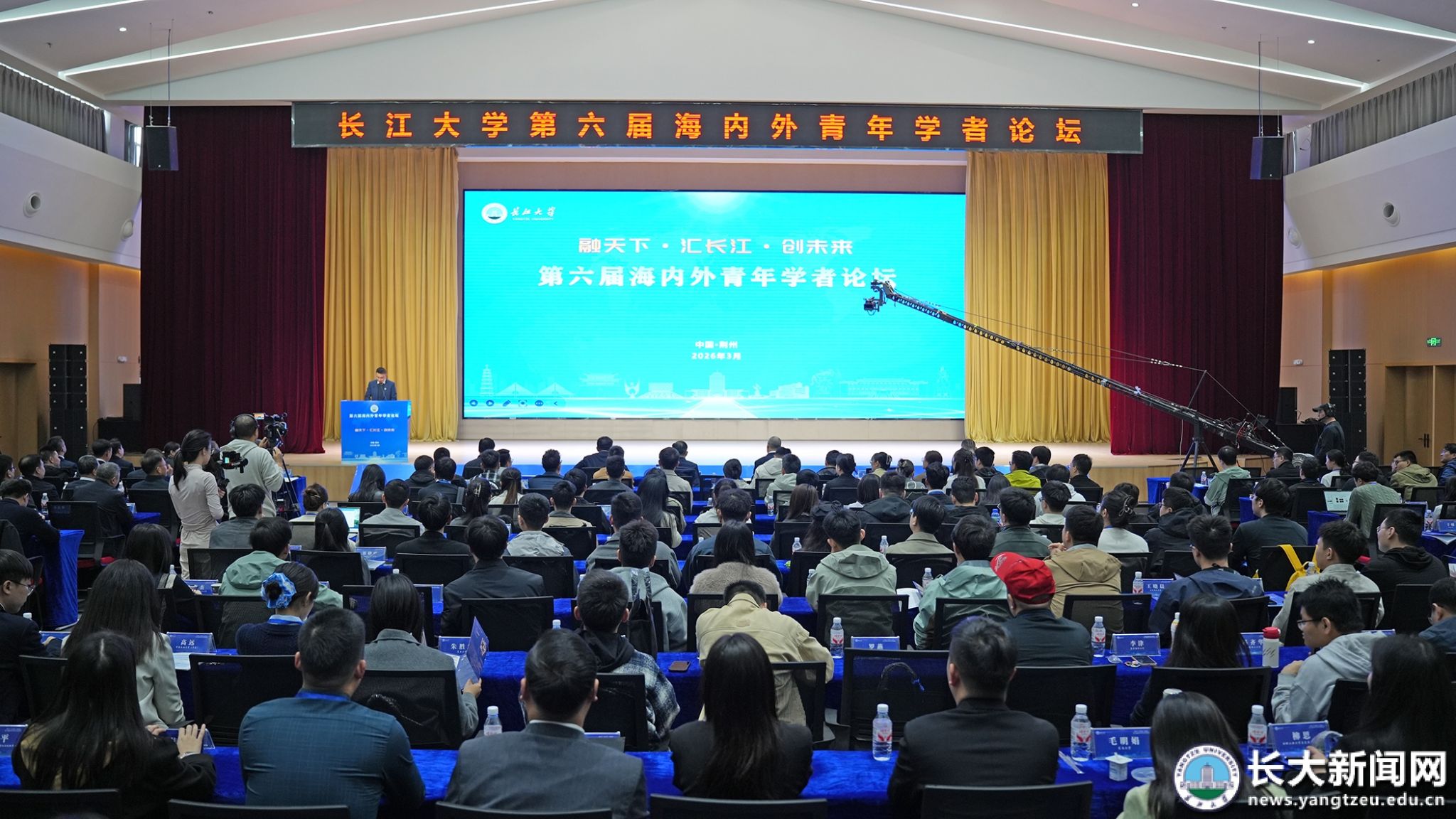
The event was attended by Chen Zhicheng, Director of the Innovation and Entrepreneurship Department of the Hubei Talent Development Group; Fu Qianwu, Deputy Director of the Organization Department of the CPC Jingzhou Municipal Committee; Liu Yongsheng, President of Yangtze University; Li Yingjun, Member of the Standing Committee of the CPC Yangtze University Committee, Director of the Organization Department, and Director of the United Front Work Department; Shi Xiaojun, Deputy General Manager of Jingzhou Talent Development Group; as well as leaders from the University's administrative and academic units and young scholars from around the world, both on site and online. The forum was chaired by Lü Yibing, Deputy Secretary of the CPC Yangtze University Committee and Vice President of the University.
In the welcome address, President Liu Yongsheng introduced the University's history, disciplinary strengths, research capabilities, and long-term vision. He noted that Yangtze University, guided by its spirit of “Seeking Truth, Striving for Progress, Entrepreneurship, and Serving the Country”, has grown into the largest comprehensive university under the administration of Hubei Province, offering the broadest range of academic disciplines. Nine disciplines are ranked among the top 1% globally in ESI, the highest number among Hubei's provincial universities. Its discipline of Petroleum and Natural Gas Engineering has achieved significant progress in national disciplinary evaluation and ranks fourth nationwide in ARWU. The University is home to more than 100 national and provincial research platforms, including the State Key Laboratory of Low-carbon Catalysis and Carbon Dioxide Utilization. In 2025, annual research funding exceeded RMB 600 million, ranking first among provincial universities in Hubei. Yangtze University has also established substantive partnerships with more than 100 universities and research institutions worldwide and is jointly supported by Hubei Province, China's three major national oil companies, and the Ministry of Agriculture and Rural Affairs.
President Liu emphasized that the University remains committed to its talent-first strategy by building a comprehensive talent development system, a merit-based evaluation mechanism, and a full range of support services designed to foster academic excellence. He invited outstanding young scholars worldwide to join Yangtze University, pursue ambitious research, and realize their academic aspirations while contributing to the University's continued development.
Representatives from provincial and municipal talent authorities introduced talent support policies offered by Hubei Province and Jingzhou City, outlining a range of incentives and resources designed to support innovation, entrepreneurship, and career development for international and domestic scholars.
Chen Zhicheng highlighted Hubei's ongoing implementation of a province-wide talent strategy and its efforts to attract outstanding professionals through a series of major talent initiatives. He reaffirmed the commitment of Hubei Talent Development Group to providing comprehensive support services for scholars choosing to build their careers in the province.
Fu Qianwu introduced Jingzhou's rich cultural heritage, historical significance, and favorable living environment. He noted that the Jingzhou Municipal Government fully supports Yangtze University's development and offers comprehensive assistance for recruiting high-level talent, welcoming scholars from around the world to join the University.
The forum also showcased the University's five academic divisions and its national research platforms, highlighting their disciplinary strengths and research opportunities. The State Key Laboratory of Low-carbon Catalysis and Carbon Dioxide Utilization presented its research on key carbon capture, utilization, and storage (CCUS) technologies and its ambition to become a globally influential innovation hub. The Division of Energy Sciences highlighted its 76-year tradition of excellence in petroleum and natural gas engineering and its world-class disciplinary development. The Division of Agricultural Sciences showcased achievements in crop breeding, ecological agriculture, and animal vaccine research. The Division of Engineering and Information Sciences demonstrated its advances in intelligent equipment, digital oilfields, and low-carbon technologies through interdisciplinary innovation. The Division of Humanities and Social Sciences emphasized the integration of humanities with emerging disciplines to support regional economic, social, and cultural development, while the Division of Medical Sciences presented its 75-year history of coordinated progress in medical education, research, and healthcare innovation.
Yang Wenxing, Director of the Human Resources Department, introduced the University's Yangtze Scholars Career System and talent policies. He outlined three major talent development programs designed to support scholars at different career stages through competitive compensation, start-up research funding, promotion opportunities, graduate supervision qualifications, team-building resources, and comprehensive living support, creating an environment in which talented researchers can thrive.
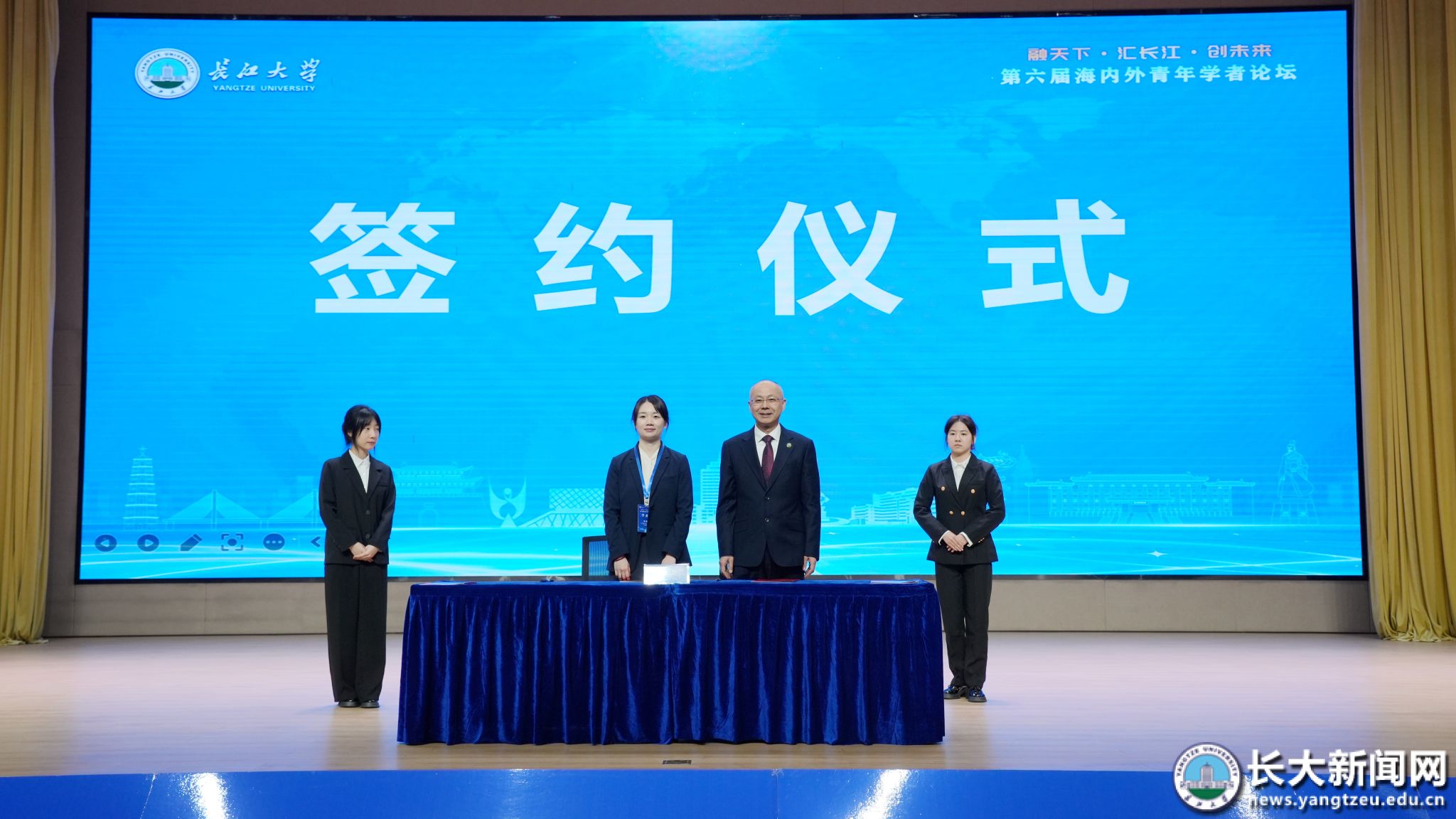
A signing ceremony was held during the forum, where President Liu Yongsheng signed employment contracts and cooperation agreements with six newly recruited young scholars, marking their official appointment to Yangtze University.
Fu Teng, a young faculty member at the University, shared his personal experience of professional growth at Yangtze University, describing the University's strong support in research funding, collaborative academic teams, and comprehensive living services, which have enabled young academics to focus on research, teaching, and career development.
The main forum concluded with a performance of the Yangtze University Anthem. The event was live-streamed worldwide through the University's official Douyin and WeChat Channels, attracting an online audience of more than 10,000 viewers.
In the afternoon, an International Scholars Workshop and a series of college-level sub-forums were held. During the workshop, staff from the University's Talent Service Center introduced recruitment policies and procedures, while experienced faculty members shared practical advice with overseas scholars. Individual colleges organized academic discussions and networking sessions, providing opportunities for in-depth exchanges between prospective faculty members and academic departments.
The 6thGlobal Young Scholars Forum forms part of Yangtze University's broader efforts to advance the integrated development of education, science, technology, and talent, while strengthening its talent-driven development strategy. Since the launch of the Global Young Scholars Forum series, the University has recruited and cultivated more than 20 national-level high-caliber talents and attracted 279 full-time doctoral faculty members, significantly enhancing its capacity for high-quality education, research, and innovation.